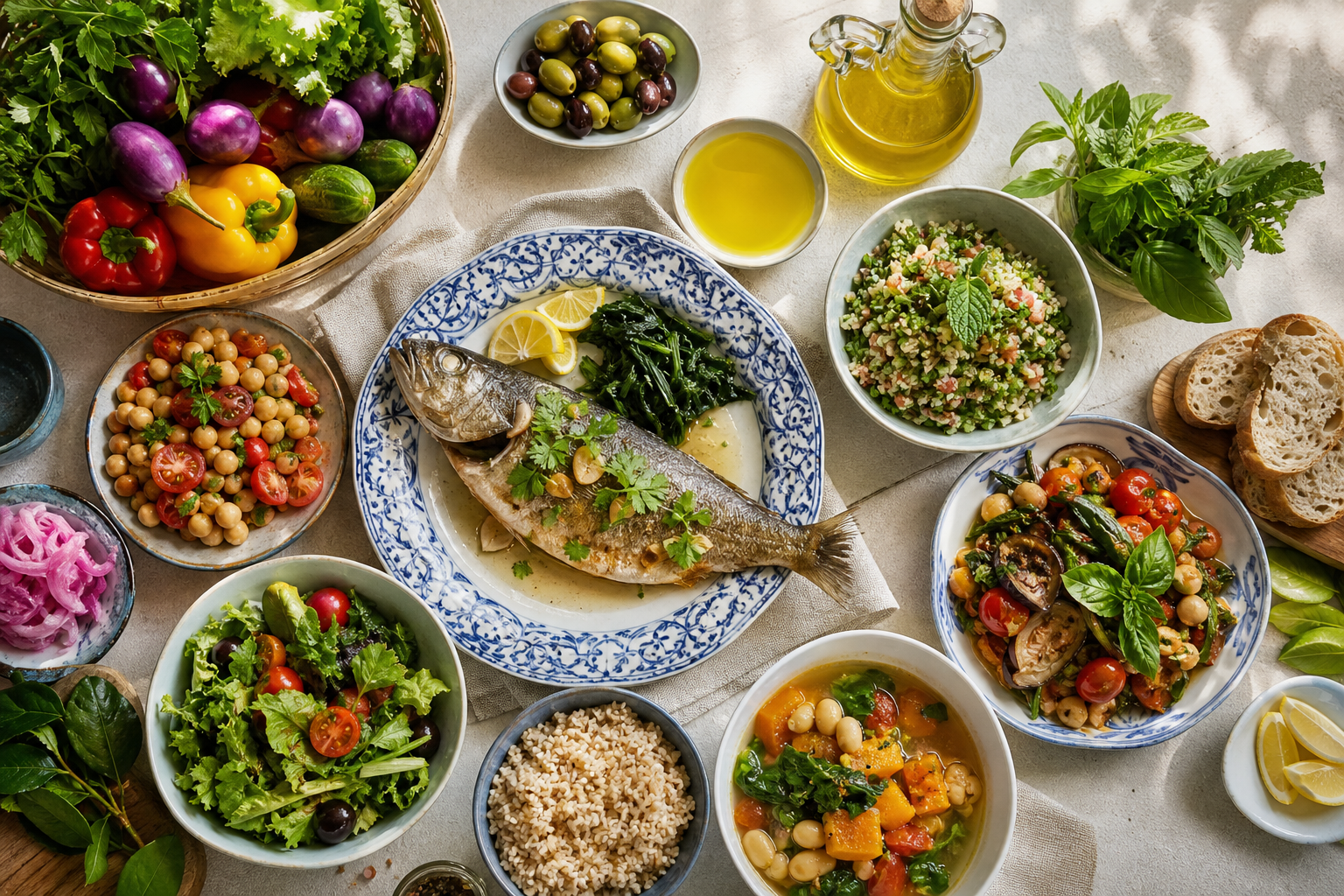
Mediterranean diet ได้ชื่อว่าเป็นอาหารที่ดีที่สุดต่อหัวใจในรอบ 30 ปี งานวิจัยจาก NEJM, Circulation, และ meta-analysis ในรอบ 5 ปีที่ผ่านมา ยืนยันว่ามันลดความเสี่ยงโรคหัวใจและหลอดเลือดได้อย่างชัดเจน
แต่ปัญหาคือ — คนไทยไม่ได้กินแบบเมดิเตอร์เรเนียน และการจะให้เปลี่ยนไปกินเป็นน้ำมันมะกอก ขนมปังโฮลวีท และปลาแซลมอนทุกวัน ไม่ได้ยั่งยืนสำหรับวัฒนธรรมการกินของเรา
"Thai-style Mediterranean" — แนวทางใหม่
ปี 2023-2026 นักวิจัยเริ่มเสนอแนวคิด Thai-style Mediterranean diet — เก็บหลักการของ Mediterranean แต่ใช้วัตถุดิบไทยที่ให้คุณสมบัติเหมือนกัน
น้ำมันมะกอก → น้ำมันรำข้าวหรือน้ำมันมะพร้าวเย็น
น้ำมันรำข้าวไทยมี gamma-oryzanol ที่ช่วยลดคอเลสเตอรอล ขณะที่น้ำมันมะพร้าวเย็น (virgin coconut oil) มี MCT ที่ร่างกายใช้เป็นพลังงานได้โดยตรง
ปลาแซลมอน → ปลาทูไทย ปลาน้ำดอกไม้ ปลาสวาย
ปลาทะเลไทยหลายชนิดมี omega-3 สูงไม่แพ้แซลมอน และถูกกว่า 3-5 เท่า
ขนมปังโฮลวีท → ข้าวกล้อง ลูกเดือย ข้าวกล้องงอก
คาร์บเชิงซ้อนของไทยให้ไฟเบอร์และ polyphenol เหมือนกัน ไม่ต้องไปหาซื้อ sourdough นำเข้า
ถั่วอัลมอนด์ → ถั่วลิสง ถั่วเขียว เมล็ดกระบก
ถั่วไทยให้โปรตีนและไขมันดีเหมือนอัลมอนด์ ในราคาที่ถูกกว่า 10 เท่า
ตัวอย่างมื้อ Thai-style Mediterranean
- มื้อเช้า: ข้าวต้มข้าวกล้อง + ปลาทูทอด + ผักกาดดอง
- มื้อเที่ยง: ส้มตำไทย (ใส่ถั่วลิสง) + ไก่ย่าง + ข้าวเหนียว
- มื้อเย็น: แกงเลียง + ปลาน้ำดอกไม้นึ่ง + ข้าวกล้อง
- ของว่าง: ถั่วลิสงอบ + ผลไม้ไทย
"เราไม่จำเป็นต้องทิ้งวัฒนธรรมการกินของเราเพื่อสุขภาพ อาหารไทยทำหน้าที่ Mediterranean ได้หลายอย่างอยู่แล้ว"
ภายใต้คำแนะนำล่าสุดของ American Heart Association ปี 2026 — หลักการสำคัญของอาหารดีต่อหัวใจคือ: ผักเยอะ ของหมัก คาร์บเชิงซ้อน ไขมันดีจากพืชและปลา โปรตีนเลี่ยนเนื้อแดง อาหารไทยที่เราโตมามีทุกข้อที่ว่านี้ แค่เราไม่เคยมองมันในแง่นั้น
The Mediterranean diet has been the gold standard for heart health for 30 years. Research in NEJM, Circulation, and recent meta-analyses confirms it substantially lowers cardiovascular risk.
The problem: Thais don't eat Mediterranean. Asking people to switch to olive oil, whole wheat bread, and daily salmon isn't sustainable for our food culture.
"Thai-style Mediterranean" — a new approach
Since 2023-2026, researchers have been proposing the Thai-style Mediterranean diet — keep the principles, swap in Thai ingredients that deliver the same functional properties.
Olive oil → rice bran oil or cold-pressed coconut
Thai rice bran oil contains gamma-oryzanol, which helps lower cholesterol. Virgin coconut oil has MCTs the body uses directly for energy.
Salmon → Thai mackerel, pangasius, or river catfish
Several Thai sea fish have omega-3 levels comparable to salmon — at 1/3 to 1/5 the price.
Whole wheat bread → brown rice, Job's tears, germinated brown rice
Thai complex carbs deliver the same fiber and polyphenols without imported sourdough.
Almonds → peanuts, mung beans, krabok seeds
Thai nuts and seeds deliver similar protein and healthy fats at 1/10 the cost.
A day of Thai-style Mediterranean eating
- Breakfast: brown rice porridge + grilled mackerel + pickled greens
- Lunch: som tam with peanuts + grilled chicken + sticky rice
- Dinner: gaeng liang + steamed pangasius + brown rice
- Snack: roasted peanuts + Thai fruit
"We don't have to abandon our food culture to be healthy. Thai food already does most of what a Mediterranean diet does."
Under the 2026 American Heart Association guidance, the key principles of a heart-healthy diet are: plenty of plants, fermented foods, complex carbs, plant- and fish-based fats, limited red meat. The Thai food we grew up eating checks every box — we just never thought of it that way.